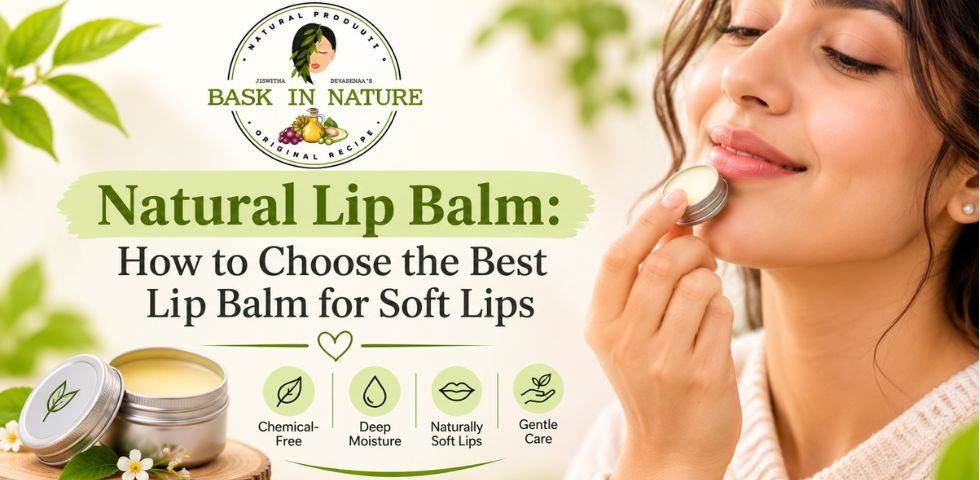
Natural Lip Balm: How to Choose the Best Lip Balm for Soft Lips
Lips have a delicate surface and can become dry from wind, air-conditioning, sun exposure, dehydration or frequent licking. A good balm helps reduce moisture loss and keeps lips comfortable. When choosing a natural lip balm, consider its ingredients, texture and finish.
What Should a Good Lip Balm Do?
Look for conditioning ingredients such as shea butter, kokum butter, cacao butter and plant oils. These help soften lips and create a protective layer that slows moisture loss. Beeswax or plant-derived waxes can also help form a barrier. Natural ingredients can still cause sensitivity.
Bask in Nature offers five lip balm options alongside its Matcha Lip Scrub. Each balm combines oils and butters, with different tints and finishes to suit personal preferences.
Explore Bask in Nature’s Lip Care Range
Beetroot Lip Balm gives a soft beetroot-inspired tint while its oils and butters help condition dry lips. Swipe a thin layer onto clean lips and reapply when they feel dry or when you want to refresh the colour.
Rose Lip Balm provides a gentle rosy tint and includes rose essential oil. Use it for everyday moisture and a subtle wash of colour; apply directly and layer for a more noticeable finish if desired.
Pink Lip Balm offers a fresher pink tone for days when you want colour without a full lipstick. Its blend of oils and butters helps keep lips feeling supple. Apply one swipe for a light tint or build gradually.
Chocolate Lip Balm suits those who prefer a warmer, cocoa-inspired look. Its nourishing butter-and-oil base helps soften lips while adding a subtle chocolate tone. Use it as a daily balm and reapply after eating or drinking.
Nude Lip Balm is the tint-free option. It is useful when you want moisturised lips without visible colour, or as a conditioning base before lipstick. Apply a thin layer to clean lips and refresh as needed.
Add Gentle Exfoliation When Needed
The Matcha Lip Scrub combines Japanese matcha, finely milled walnut shell powder, butters and oils. It is designed to lift away dry, flaky surface skin while conditioning the lips. Wet lips slightly, apply a small amount, then massage with very light circular movements. Rinse or wipe away and follow with balm.
Use the scrub around once or twice weekly, not as a daily step. Avoid scrubbing cracked, sore or irritated lips; allow them to recover first. Exfoliation should never feel painful or leave lips raw.
Build a Simple Lip Routine
The best natural lip care products are those you use consistently and comfortably. Apply balm when you wake up, before going outdoors and whenever lips feel dry. Reapply after meals, drinking or wiping your mouth. If you spend time outside, consider a lip product with suitable sun protection, since tint alone does not protect against UV exposure.
When comparing natural personal care products, check the complete ingredient list, storage guidance and shelf-life information. Keep the lid closed, avoid sharing lip products and use clean fingers if the balm comes in a pot. Stop using it if you notice irritation.
Choose natural beauty products based on your needs rather than assuming natural ingredients suit everyone. Bask in Nature’s range makes it possible to choose between tinted everyday balms, a colour-free option and occasional exfoliation. Your balm should leave lips comfortable, not stinging or unusually dry. Gentle consistent care matters more than scrubbing.
FAQs
How often should I apply lip balm?
Apply whenever lips feel dry, including after eating or drinking. Reapply as needed.
How often should I use the Matcha Lip Scrub?
Use it gently once or twice a week, and avoid irritated or cracked lips.
Which balm should I choose if I do not want colour?
The Nude Lip Balm is the tint-free option and can also be used beneath lipstick.
Are natural lip care products suitable for everyone?
Not always. Essential oils and botanicals may cause sensitivity. Check ingredients and discontinue use if irritation occurs. Natural personal care products should be selected according to your preferences and tolerance. Natural beauty products can still trigger reactions, so patch testing is sensible.