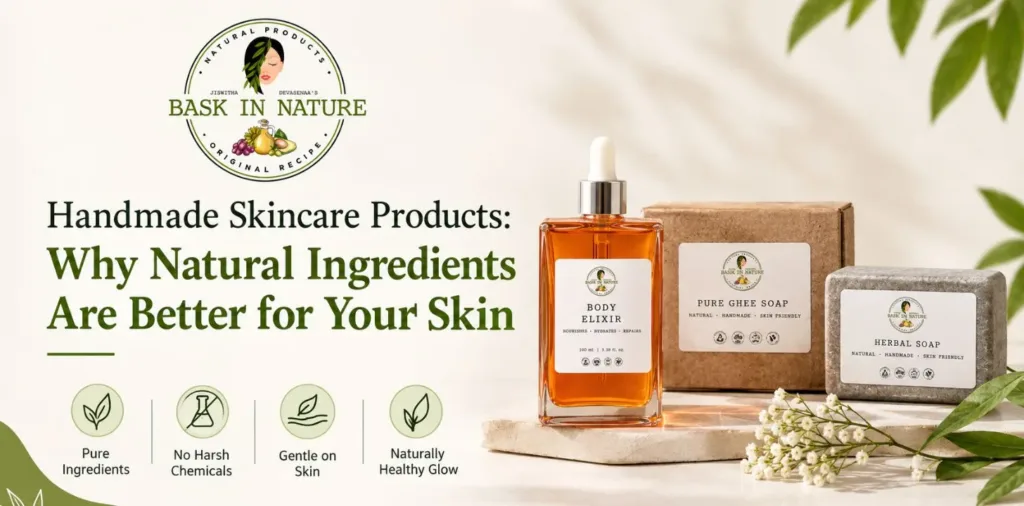
Handmade Skincare Products: Why Natural Ingredients Are Better for Your Skin
Skincare is becoming less about having a crowded shelf and more about understanding what goes onto your skin. This is where handcrafted routines and natural beauty products have gained attention. Consumers are looking beyond packaging, asking how products are made, how fresh they are, and whether ingredients have a clear purpose.
Why Natural Ingredients Matter
Natural ingredients can offer a simpler approach to everyday skincare. Plant oils, butters, clays, botanical powders, waxes and floral waters each bring distinct properties. When selected thoughtfully, they can cleanse, soften, condition or moisturise without making the routine complicated.
However, natural does not automatically mean suitable for everyone. Essential oils, botanicals and other naturally derived ingredients can still cause sensitivity in some people. Reading the ingredient list and patch testing a new product is therefore important.
What Makes Handmade Skincare Different?
The value of the handmade skincare products is not simply that they are made by hand. It is the attention given to the process. Small-batch production can help makers work closely with ingredients, monitor batches and maintain a deliberate formulation process.
Freshness is another factor worth checking. Ask when a product was made, how it is stored, and whether the brand follows a sensible production cycle. A transparent maker should explain these details rather than relying only on words such as “fresh” or “pure.”
How to Check If a Brand Is Authentic
A genuinely nature-led brand should demonstrate its values through more than marketing language. Look for clear ingredient information, realistic product descriptions, visible manufacturing practices and consistency between what the brand says and what it sells.
Social media can provide another useful layer of verification. Check that you are viewing the brand’s official social media handle rather than a copied or unofficial account. Look through older posts, customer comments, tagged content and user-generated reviews. Real testimony usually contains specific experiences rather than identical promotional statements.
Assess whether the brand’s values appear consistently across its website, packaging, social channels and customer communication. If a company promotes simplicity but provides vague ingredient information, look closer. Authenticity is built through transparency and consistency.
Choosing Products for Your Routine
When selecting natural face care products, start with your actual skin needs rather than buying everything labelled natural. Natural face care products should earn a place in your routine through purpose, not popularity. A gentle cleanser, moisturising product or botanical mist may be enough. Well-chosen natural face care products can keep the routine focused. Introduce products gradually to understand how your skin responds.
The same principle applies to natural personal care products. Consider your needs, ingredient preferences and frequency of use. Natural personal care products should fit comfortably into everyday habits. Choosing fewer natural personal care products can also make consistency easier.
The appeal of natural beauty products is about making informed choices for better everyday choices. Look beyond the label, investigate the maker, check freshness and understand the ingredients. Handmade production can add care, but transparency builds trust.
FAQs
Are handmade skincare products always better?
Not automatically. Their value depends on ingredient quality, formulation, hygiene, freshness and the maker’s transparency.
Are natural ingredients suitable for sensitive skin?
They may be, but natural ingredients can still trigger sensitivity. Check the formulation and patch test before regular use.
How can I verify a brand’s social media testimonials?
Use the official handle, review older posts, tagged customer content, comments and detailed user experiences instead of relying only on promotional claims.
How do I judge freshness?
Check manufacturing or batch information, storage guidance and whether the brand explains how frequently products are produced.