Why Choose ‘No Additives’ Beauty Products for Sensitive Skin?
Sensitive skin can be difficult to manage. What works for one person may trigger irritation, redness, dryness, or flare-ups for another. As awareness around skincare ingredients grows, many people with sensitive skin are becoming more careful about the products they use daily. This has increased interest in gentler alternatives like organic skincare products, handmade skincare products, and cleaner formulations that avoid unnecessary additives.
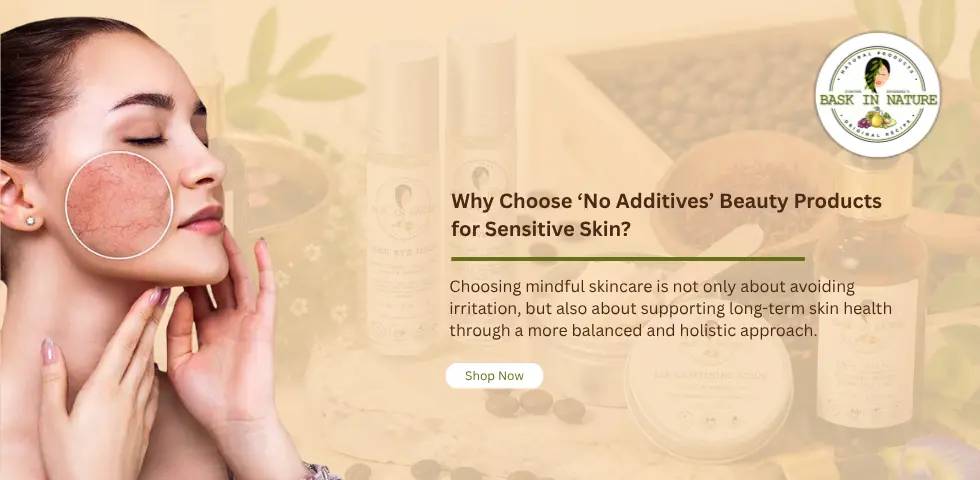
For people dealing with recurring skin sensitivity, small changes in their routine can often make a significant difference over time. Choosing mindful skincare is not only about avoiding irritation, but also about supporting long-term skin health through a more balanced and holistic approach.
What Does “No Additives” Mean in Beauty Products?
In skincare and haircare, additives are ingredients added to improve texture, fragrance, color, shelf life, or product stability. These can include:
- Artificial fragrances
- Synthetic dyes
- Certain preservatives
- Foaming agents
- Texture enhancers
While not every additive is automatically harmful, some people, especially those with sensitive skin, may react negatively to repeated exposure. Products labeled as “no additives” generally aim to reduce unnecessary synthetic ingredients and focus on simpler, skin-friendly formulations.
This is one reason why many consumers are turning toward natural beauty products that prioritize ingredient simplicity and transparency.
Are Additives Always Harmless?
The impact of additives is not always negligible. For some individuals, the skin may tolerate them without any visible reaction. However, people with sensitive skin often have a weakened or easily disrupted skin barrier, making them more prone to irritation.
Certain additives may contribute to:
- Redness and itching
- Burning sensations
- Dry patches
- Breakouts and flare-ups
- Increased skin sensitivity over time
Artificial fragrances are one of the most common triggers. Even products marketed as gentle may contain fragrance blends or preservatives that can irritate reactive skin.
This is why many people prefer organic skincare products that focus on fewer, naturally derived ingredients instead of heavily processed formulations.
How to Understand Additives in Ingredient Lists
One of the easiest ways to identify additives is by reading the ingredient label carefully. Ingredients are usually listed in order of concentration, meaning the first few ingredients make up most of the product.
Here are a few things to look for:
- Strong fragrances listed as “parfum” or “fragrance”
- Long lists of synthetic chemical names
- Alcohol-heavy formulations
- Artificial colorants or dyes
Unfortunately, brands are not always required to disclose the exact quantity of additives used. However, if additives or fragrance ingredients appear near the top of the ingredient list, the product likely contains a higher concentration of them.
Consumers are increasingly choosing handmade skincare products because smaller-batch formulations often contain fewer unnecessary additives and more thoughtfully selected ingredients.
Common Challenges Faced by Sensitive Skin
People with sensitive skin often experience recurring concerns that affect both comfort and confidence. These may include:
- Sudden flare-ups after trying new products
- Tightness or dryness after cleansing
- Skin reacting to weather changes
- Redness and irritation from fragrances
- Difficulty finding products that feel gentle enough
Sensitive skin can also become overwhelmed when too many active ingredients or harsh products are layered together. This is why simpler routines are often more effective.
Using natural beauty products with minimal additives can help reduce unnecessary stress on the skin barrier while supporting gradual healing and balance.
Small Changes That Can Help Sensitive Skin
Managing sensitive skin does not always require a complicated routine. In many cases, small consistent changes can create noticeable improvements over time.
Helpful adjustments include:
- Switching to fragrance-free skincare
- Avoiding harsh exfoliants
- Using lukewarm water instead of hot water
- Reducing the number of products used daily
- Choosing cleaner formulations with fewer additives
Products rooted in simpler ingredient philosophies, including handmade skincare products, often feel gentler because they avoid excessive fillers and unnecessary synthetic ingredients.
Sensitive Skin Requires a Holistic Approach
Sensitive skin should not be treated only as a surface-level issue. Factors like stress, sleep quality, hydration, diet, and environmental exposure can all influence how the skin reacts.
A holistic approach involves:
- Supporting the skin barrier gently
- Managing internal wellness
- Avoiding ingredient overload
- Choosing mindful skincare habits consistently
Instead of constantly trying stronger treatments, many people find better results by focusing on calming, nourishing routines over time.
As awareness grows, more consumers are understanding that skincare is not about using the maximum number of products, but using the right ones. Choosing simpler, cleaner alternatives can help sensitive skin feel healthier, calmer, and more balanced in the long run.
FAQs
- What are additives in skincare products?
Additives are ingredients added to improve fragrance, texture, color, preservation, or product stability. - Can additives trigger sensitive skin flare-ups?
Yes, certain additives such as artificial fragrances and preservatives may cause irritation, redness, or breakouts in sensitive skin. - Why are handmade skincare products preferred for sensitive skin?
They often contain fewer unnecessary additives and focus on gentler, carefully selected ingredients. - Are natural beauty products always safe for sensitive skin?
While many are gentler, it is still important to patch test products and choose formulations suitable for your skin type.